


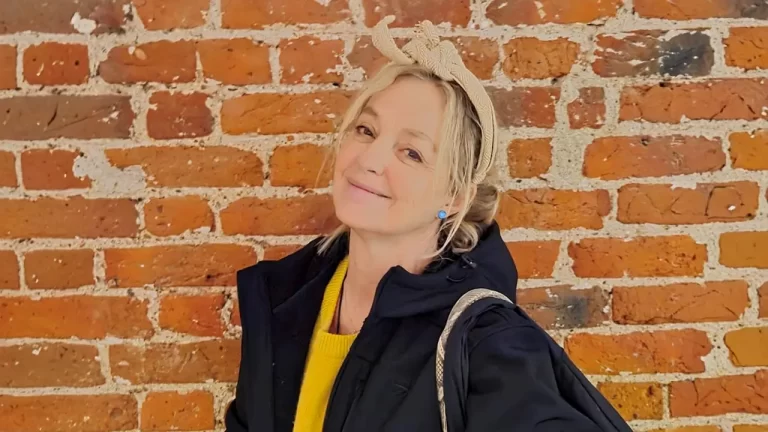
IRINA BROOK: „Pentru mine, teatrul este ca o religie” →
CLIN D’OEIL | Director IRINA BROOK: “For me, theatre is like a religion”
The presence of the renowned theatre and opera director Irina Brook at the International Shakespeare Festival in Craiova, with her production Lear?, also carries an anniversary dimension: exactly 30 years ago, the daughter of actress Natasha Parry and director Peter Brook made her debut as a director in London with Beast on the Moon.
From that moment on, IRINA BROOK stepped away from her acting career — trained at the Stella Adler school — and devoted herself to directing, a path confirmed over time by numerous distinctions and the warm reception of audiences, whether she chose to leave her own artistic mark on Homer’s Odyssey, Brecht’s The Good Person of Szechwan, Marivaux’s The Island of Slaves, Ibsen’s Peer Gynt, or Tennessee Williams’s The Glass Menagerie.
Irina Brook’s relationship with Shakespeare seems a perennial one: in 1997 she was already staging theatre-within-theatre in England with All’s Well That Ends Well; in 2001 she directed a Juliette et Roméo in Switzerland infused with abundant pop music; and in 2007 she adapted A Midsummer Night’s Dream in a highly original manner, under the title En attendant le songe…, at the Théâtre des Bouffes-du-Nord, before offering opera audiences a spectacular operatic version of the Dream in 2019, in Vienna.
About these productions — and about Shakespeare’s Sister from New York and Tempest!, the show from the Salzburg Festival — we spoke with IRINA BROOK, in an attempt to understand how her perspective on the performing arts took shape and evolved over 30 years of directing theatre and opera.
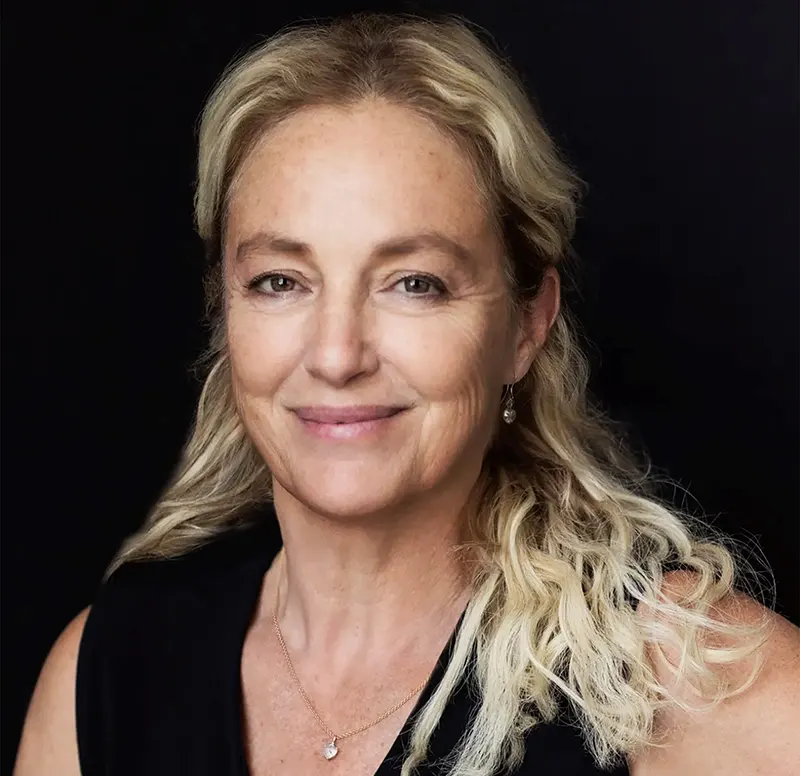
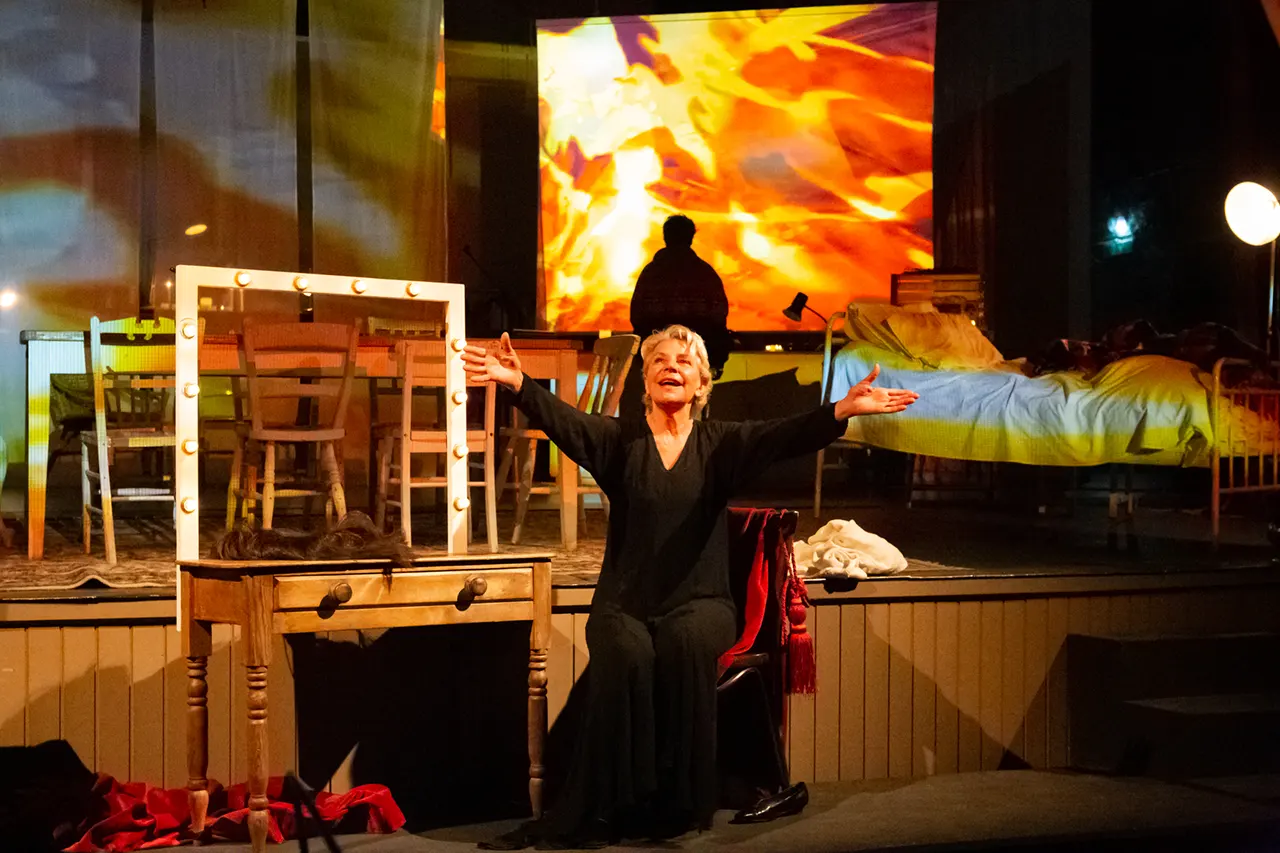
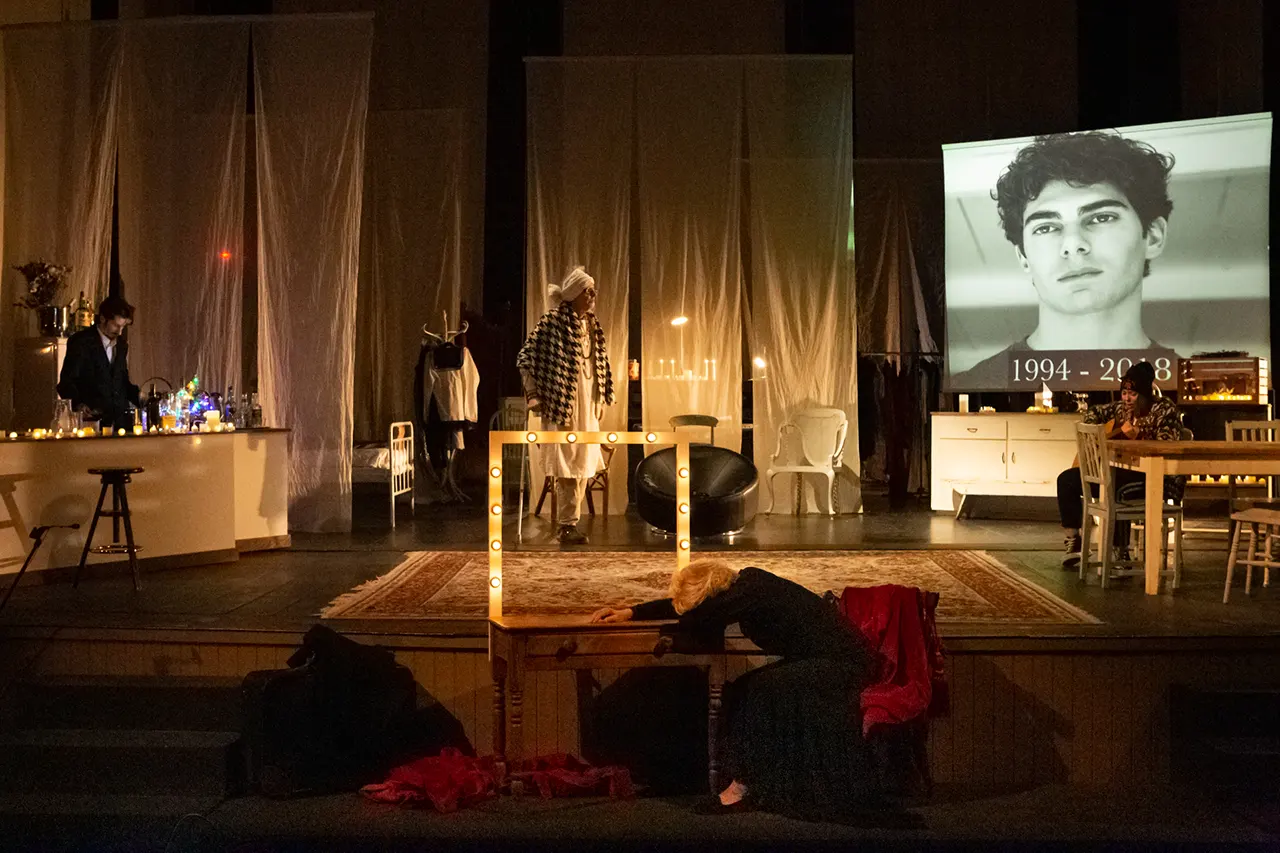
Irina, in your play Lear?, based on Shakespeare’s celebrated tragedy, the central figure is not an old and famous king but an elderly actor who imagines himself playing a king. How did you actually arrive at this exploration of the world of theatre through a Shakespearean lens?
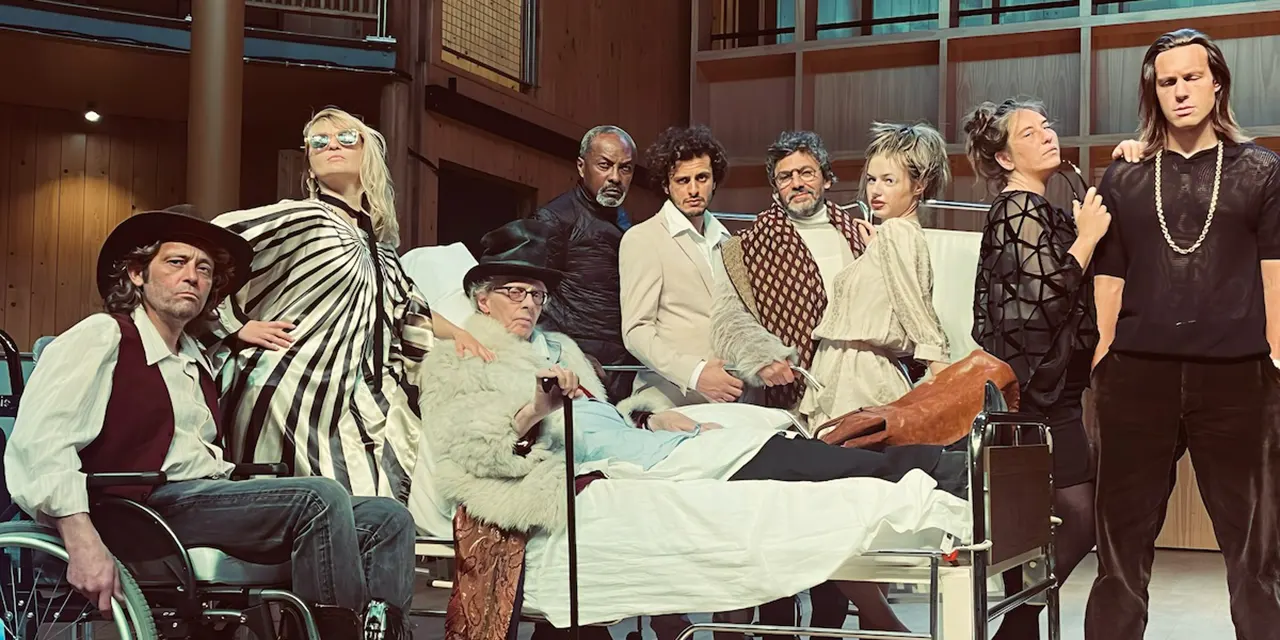
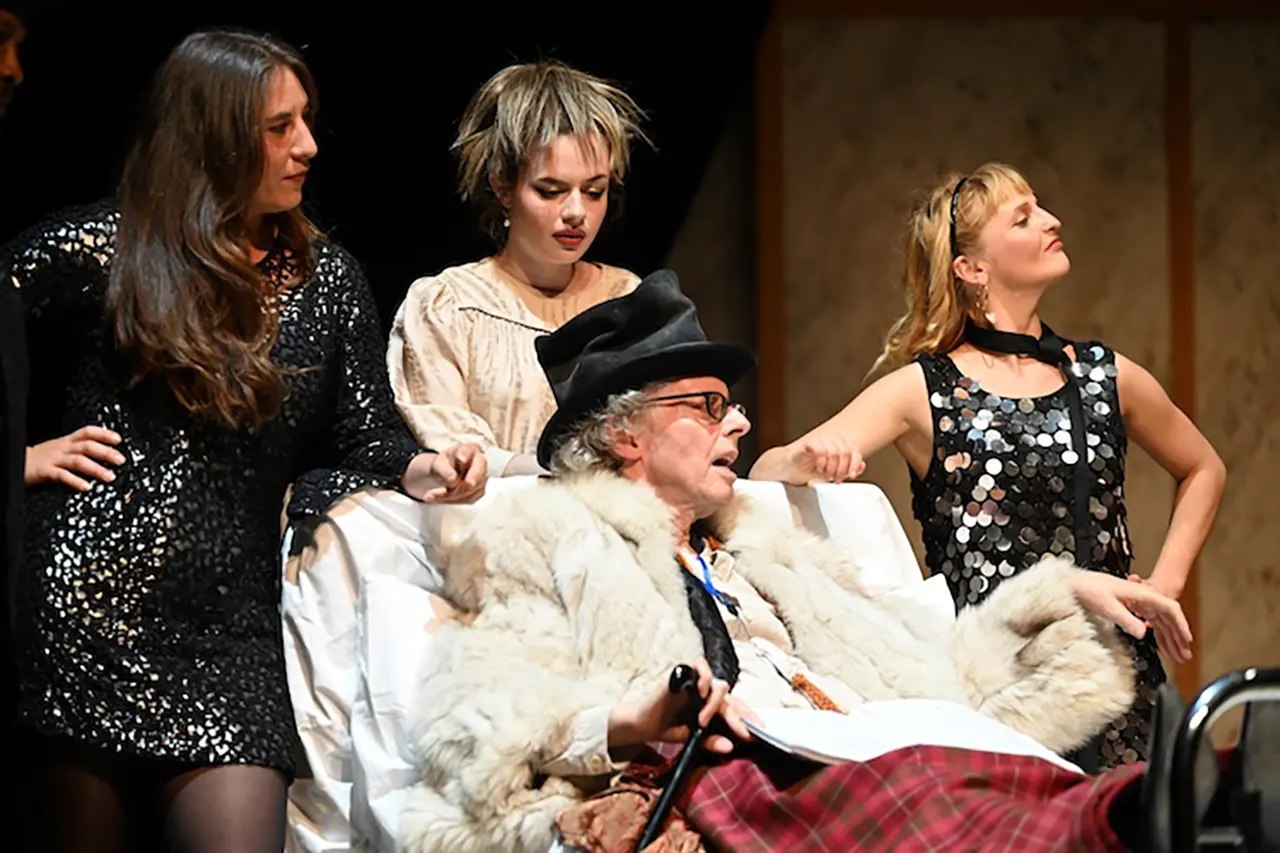
First of all, what I continue to find particularly appealing about this piece — which is a personal version of King Lear — is its very strange style: the roles inside the retirement home for ageing Shakespearean actors are played by a multitude of young performers, and that, for me, evokes the Expressionism of the 1930s.
You know, if I had staged it in England [Lear? was produced by Irina Brook’s company, Dream New World, with the support of French authorities — Ed.], I would have had to use 80-year-olds to play all these characters, simply because that’s what English naturalistic theatre demands.
But what I love is the fact that my 23-year-old daughter [Maïa Jemmett — Ed.] plays this elderly actress, Viviane, who is clearly 85 years old thanks to her wig and make-up, and I think it is interesting for the audience that what they are shown is not a naturalistic retirement home but a theatrical one — where the people who come to act out the story in the play are themselves, in fact, roles to be played for other, real people. So everything is a little meta… I become more and more meta by the day.
Taking into account the autobiographical references and the particular nature of the acting ensemble, how did this metatheatrical dimension actually emerge during the creative process?
I worked on this project over several research stages spanning a year, but first I gathered together the actors who are my most cherished company, because they genuinely cover every phase of my career.
That means I cast actors who performed in my very first version of the Odyssey — the one made for children — and in Juliette et Roméo [at Vidy-Lausanne, also in 2001 — Ed.], alongside actors who joined the company later and, not least, young people from the Nice Theatre company [where Irina Brook served as director until 2019 — Ed.].
You know, in France we always talk about “theatre families,” and this company is for me exactly that — a multi-generational family, within which we have great freedom and great ease in communicating, precisely because we know each other extremely well. That was the main reason we were able to work very quickly on Lear?. The first stage was just a very short period of research, prompted by a rather wild challenge from the theatre we were collaborating with at the time — to prepare a kind of live reading-performance of King Lear in just three days.
I imagine that’s the work-in-progress at Château d’Hardelot that began in 2023, One Shot Lear!, presented within the Shakespeare Nights festival…
Yes, we spent two days just trying to understand Lear, which was obviously not easy, and then on the third day I put the actors in front of an audience and built a mise-en-scène so the spectators would have something entertaining to follow. The saving grace was that the poor actors know me well, because it was as if I had simply thrown them up in the air without a safety net — but we performed the whole Shakespeare play, and it was simultaneously very complicated and fabulous, because we created something the audience understood and received with a certain pleasure.
After that, I returned to the play from time to time, and at a certain point the idea came to me of transposing it scenically in a way that would reduce it to the story of the whole family, the story of ageing, but also the story of theatre.
I don’t remember exactly how the ideas came about, but I had heard a few stories about this retirement home on the outskirts of London, mainly for elderly actors, and the image that struck me most was that of a very well-known English theatre actor who had performed alongside my mother.
A friend of mine told me how this actor would arrive every day at the reception desk of the home with his little bag, sit down, and say: “I’m waiting for my agent to come and take me out of here.” The old actor who believes his agent will save him and that he will go home — to me, that represents something worse than the tragedy of Tennessee Williams’s characters.
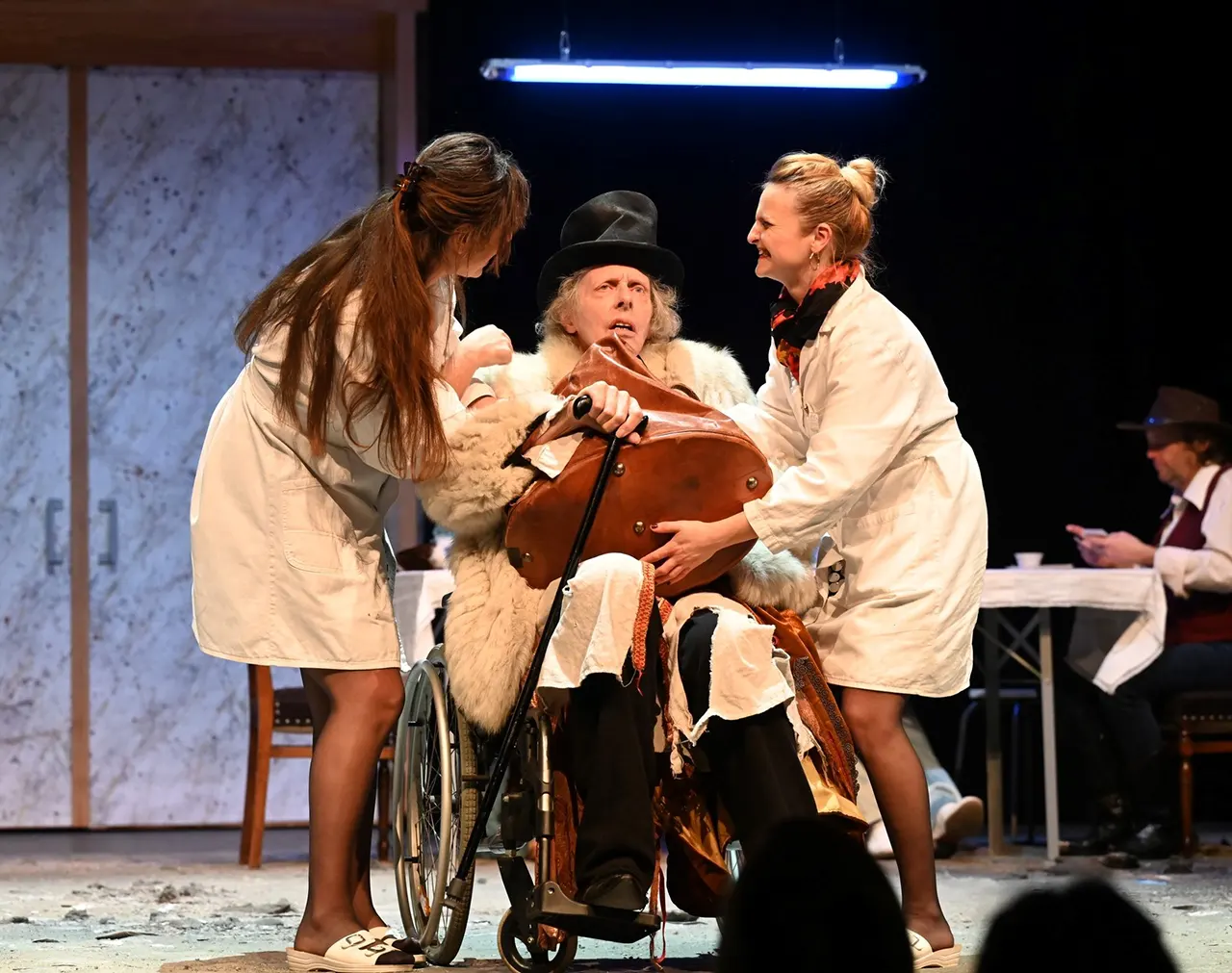
You know, I love theatre and actors so much that the actor without work or without a future is probably the most shattering tragic figure I can think of. So, given the emotional intensity of King Lear — the loss of his kingdom and his life — the parallel with an actor who loses his future seemed to me very fitting, and I quickly wrote a play, on the basis of which we then improvised for about eight days.
Essentially, I conceived a narrative thread about this home for ageing Shakespearean actors and wove it together with the story of Lear’s family and kingdom, so that in his mind the people in the home begin to transform into the characters of the play whose premiere he never got to perform. And somehow… it works.
I believe that, beyond the fact that a great deal of my father and my mother can be found in it [giving Orson Welles his cue, Natasha Parry delivers a memorable Cordelia in the 1953 TV adaptation of King Lear directed by Peter Brook — Ed.], the piece is supremely faithful, representing the very essence of King Lear, since it covers both the family dynamic and the whole story, as well as the themes of ageing and death.
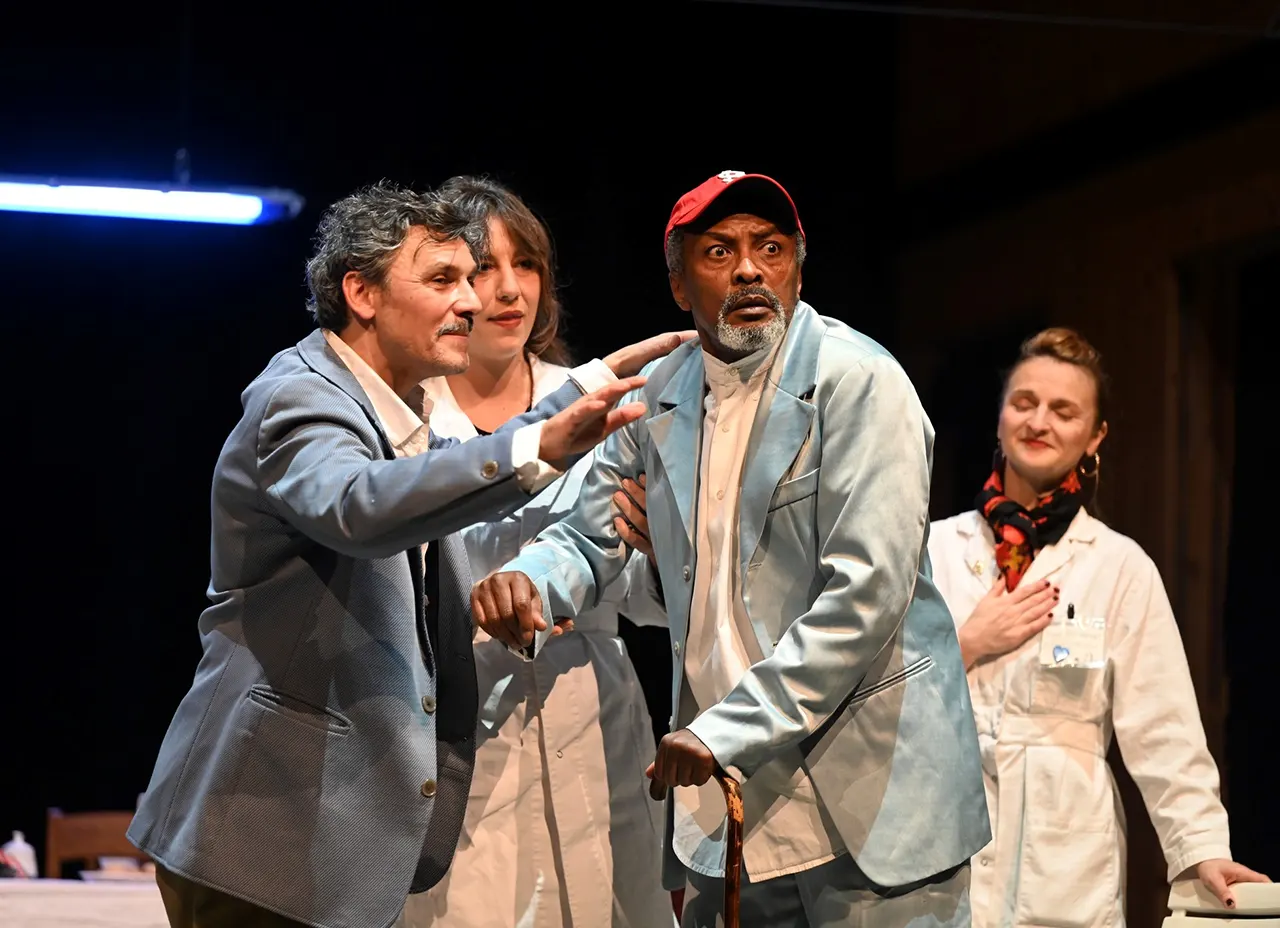
Given that the actors create on stage a world of actors, how did you involve them in the process? As author and director, to what extent did you allow them to transfer parts of themselves or their personal experiences into the characters?
Just as I have done for 30 years — I allowed them everything, yet at the same time everything was extremely well coordinated. If you like, I am a kind of midwife: with me, everything is super-controlled, meaning I am always there to ensure there are no accidents, but in the end the show is their child.
So, at the end of the process, when all the details are settled, the ideal situation from my point of view is one where neither they nor I know, for example, who came up with a particular idea or a particular joke, because sometimes I simply offer up a host of things and they receive and give back in equal measure.
In this way I shape them somehow, but it all happens with lightness and, very often, with amusement, because I just throw out an idea, they take it and come back with their own ideas, so you arrive at an absolute combination of their creativity and their minds, which makes them feel very free. In practice, they don’t even notice when it is me who gives them certain ideas, because they feel so free that they simply take them and make them their own.
![IRINA BROOK | “House of Us”, Casa dei Tre Oci (Veneţia), 2023 [6] Foto - Suzie Howell The NY Times](https://zilesinopti.ro/wp-content/uploads/2026/05/IRINA-BROOK-House-of-Us-Casa-dei-Tre-Oci-Venetia-2023-6-Foto-Suzie-Howell-The-NY-Times.webp)
Irina, in the exploration of Lear? you are motivated by very specific questions about theatre and the relevance of Shakespeare, but in your previous project, House of Us, you chose a much vaster field of inquiry — the source, the meaning, and the sense of memories. It was the first play you wrote from scratch, and you used many autobiographical elements, so it is, in essence, an exploration of your own memory. Why did you feel the need to delve so deeply into yourself, and how did you filter the impressions or memories you chose to present to the audience?
Well, House of Us emerged as a rejection of the theatre I had been making for 25 years. I left the Nice theatre because I was exhausted and returned to England, and shortly afterwards the pandemic broke out — so I had this wonderful chance of free time, with no theatre whatsoever.
It was, I would say, a year of purification, which came at a very fitting moment, giving me the space to reflect. I had drifted a long way from traditional theatre, from acting and the stage, and no longer wanted to make theatre in that way.
I had been in the service of actors and playwrights for such a long time that I had constantly told myself I would only choose to stage texts about which I felt I could have written them myself, had I been a genius… I never mounted a play simply for the sake of making another show, and my own voice was always present in what I did — through Chekhov, Shakespeare, or Tennessee Williams.
And yet I felt that this was, in fact, a small deception — I was sad, in a certain sense, that I had not attended an arts school and could not create shows based on my own plays, remaining always in the service of great writers like an invisible ghost giving shape to their words.
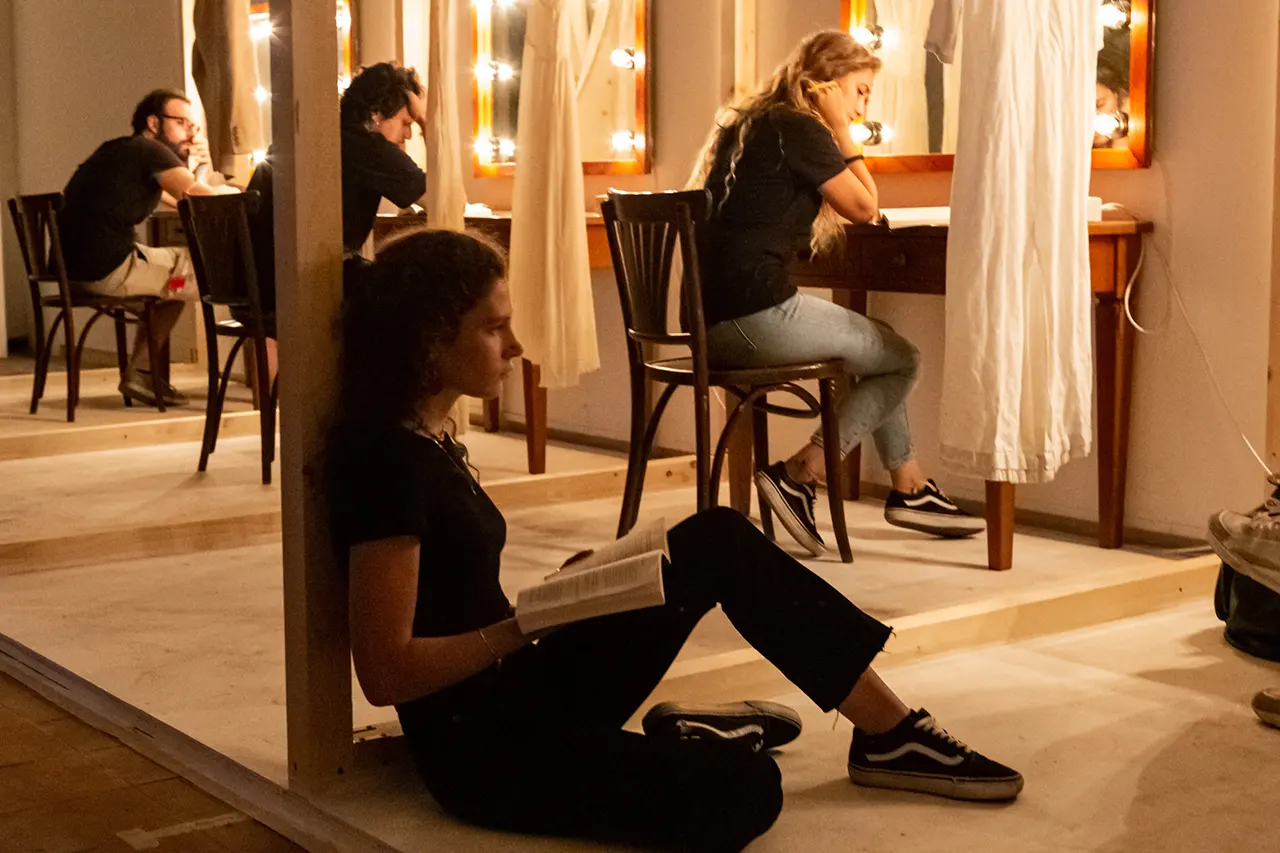
That is why I wanted to bring a part of myself into what I do, and I realised that, by staging an already existing play — however good it might be — I would never fulfil this aspiration. So I had to take a risk and try something more personal… and I hadn’t yet fully recovered from my mother’s death, and I wanted to do something about her.
You know, I felt somehow that, with everything being about my father and about patriarchy, my mother was herself invisible in a way — and so I wanted to bring her into the light [most often, Irina, as a director, has been viewed in relation to her celebrated father, Peter Brook, even though her mother, Natasha Parry, shone not only in his productions but also in work directed by René Clément, Marion Hänsel, and Richard Attenborough — Ed.].
So I simply began to write and to imagine this house centred on her and on her life as an actress, and, amazingly, I managed to create a first piece with a theatre in Palermo, Italy [the immersive performance-installation House of Us premiered in 2021 at Palazzo Sant’Elia in Palermo, before being reimagined later in Venice in 2022 — Ed.], thanks to the possibility of working there with a large group of acting students.
After that, the work evolved gradually, in a way that owes more to the subconscious than to any deliberate intention.
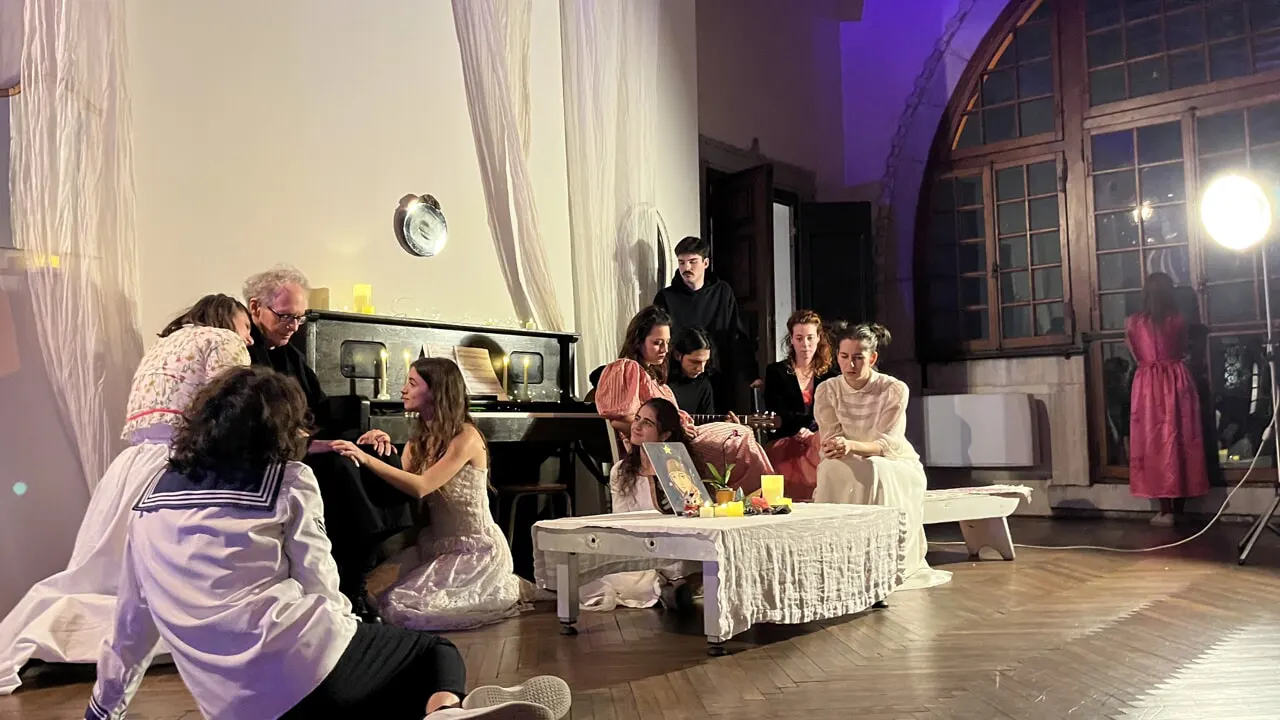
During that workshop I realised that the central figure was no longer Shakespeare — who remained, nonetheless, the father — because what emerged from it was a kind of mother-sensibility for House of Us, and that was Chekhov. And suddenly I realised that I had never staged a play by Chekhov — I had acted in some as a young actress, but I had never directed one, because I had always believed it was a little old-fashioned and, unlike Shakespeare, not something that could truly be adapted to contemporaneity.
Once I began working with the students, I discovered with emotion that Chekhov can be even more contemporary than Shakespeare, and so I drew on various excerpts from my favourite texts and monologues from his plays [Irina Brook developed House of Us in parallel with work with the students of the Scuola di Teatro del Biondo on the project Seagull Dreams — Ed.].
Through working with those young Italians — who recited Chekhov’s lines while walking through museum rooms that contained video installations I had created — I fell in love with theatre again… even more than before.
Because I had made a great many videos during lockdown, I enjoyed working with film here as well, so at the end of the tour there was a room with two actors performing on a loop, over and over, the final scene from The Seagull with Kostya and Nina. And being so reluctant to stage a play in a conventional sense, I set up a small parlour as an empty theatre hall, from which you could glance through the door and see only fragments — so that people didn’t have to sit and follow that entire boring play… as I believed The Seagull was at the time.
Yet when I returned the following year and directed The Seagull in the same theatre — because I had fallen in love with theatre again — I loved it and no longer found it boring at all.
Because this month marks exactly 30 years since your debut as a director — following your start in theatre as an actress — I would like to go back in time to the circumstances in which you truly began to believe this was the path to follow in the world of the performing arts…
I believed in myself from the very early years, even if I gradually lost that confidence little by little. With the first show I directed, Beast on the Moon — about the Armenian genocide — I believed in it so strongly that I didn’t think at all about what people would say about my leap from acting to directing, in the shadow of my father… I simply did it, believing very deeply in that production [which premiered in May 1996 at the Battersea Arts Centre in London — Ed.], and I was right, because it was a success and changed my entire life.
I then continued for about five years in a kind of euphoric state, telling myself: ‘Wow, I think I have so much to say and to share!’ But at a certain point I grew somewhat tired of the whole thing, and from then on — essentially until now — I have always been swimming against the current and have managed to make only choices that run counter to a successful career.
I mean it. I have always felt a little like Cordelia with her “nothing” — that is, every time I should have said ‘Yes, of course I’ll do this!’, I said ‘No’. Whenever I received an offer for something that might have been important but didn’t attract me, I didn’t accept it, and that holds true to this day.
I recently received a proposal from a theatre in England for a show about a major political figure none of us likes — and I won’t say the name because I don’t want to and I don’t think it would serve any purpose — which could have represented a major breakthrough for me in the West End and on Broadway. But in the end I decided that I cannot stage a play about that subject if it is to be my first large-scale English-language production… it must be about something I care about and that will bring beauty to the world.
You know, I have made a great many very strange choices in my life, but I can say with certainty that I have always remained true to myself and that I have absolutely no ethical dispute with myself, because I have never accepted anything simply for the sake of money, glory, or success.
I’ll make a small digression connected to Beast on the Moon, which dealt with immigrants in America a century ago. Have you not thought of revisiting the theme in light of what is happening now in the world, and particularly in the United States?
If I found a contemporary play that was moving and beautiful and addressed this situation, I would accept immediately — I would love to have before me a new text that truly touched me. It’s just that, at least since I have been living in England again, although I have looked around here and there, I have not yet found anything of the kind, nor has anything been proposed to me that has caught my attention.
There was, at one point, a story I thought I would truly fight to adapt for the stage — about an American whistleblower who revealed that Trump’s elections were rigged by the Russians — which strikes me as the most incredible piece of fact-based fiction. Unfortunately, the woman who uncovered the story and made a film based on it, a kind of docudrama, wants to stage it herself in England, so I was unable to obtain the rights.
I repeat: if there were something truly moving, including with a political foundation, I would of course love to get involved — but no one has yet managed to offer me such a play.
On the other hand, over the years you have chosen to stage many classical texts, very different in nature — from Homer’s Odyssey or Marivaux’s The Island of Slaves to Brecht’s plays and, of course, Shakespeare. What must a story have, in essence, to motivate you to stage it?
Well, until now, probably no one other than you has actually looked carefully at these 30 years as a whole. For me, all the plays share one element in common — every choice has always been associated with profoundly transformative stories about the humanity of people, even if they are not always happy stories.
For example, The Good Person of Szechwan — the story about the need for a woman to put on a moustache in a man’s world in order to hide her good heart and appear tough — was probably one of the most important texts about which I felt that I could have written it myself, had I been Brecht, who is one of my favourite authors.
I actually staged three Brecht pieces at the opera last year, at La Scala [the Kurt Weill triptych with librettos by Bertolt Brecht, consisting of Die sieben Todsünden, Mahagonny Songspiel, and The Songs of Happy End, which premiered at Teatro alla Scala in May 2025 — Ed.], and I think there is a recurring theme, though it is introduced very discreetly. I was never interested in doing something politically in-your-face, but there is always something there about class difference and the struggle to succeed in this world.
What I mean is that there must be a very powerful humanitarian component behind the stories I choose to stage — and consequently there aren’t all that many such plays, so I end up with a kind of shortlist, and Bertolt Brecht is truly at the top of it.
I love Brecht very much, which is why I regret that the show I managed to create based on his writing was only seen by the La Scala audience — because I feel that, had it been performed in a theatre, it would have had a far greater impact. Especially since my productions always contain something related to ecology and the future of the world, though in a dystopian sense… it is probably a mixture of hope and dystopia in the direction I tend to travel.
I even introduced it into A Midsummer Night’s Dream [the 2019 production at the Vienna State Opera — Ed.] — I slip it in everywhere, but it is something minor, discreet, and people don’t realise it’s there throughout.
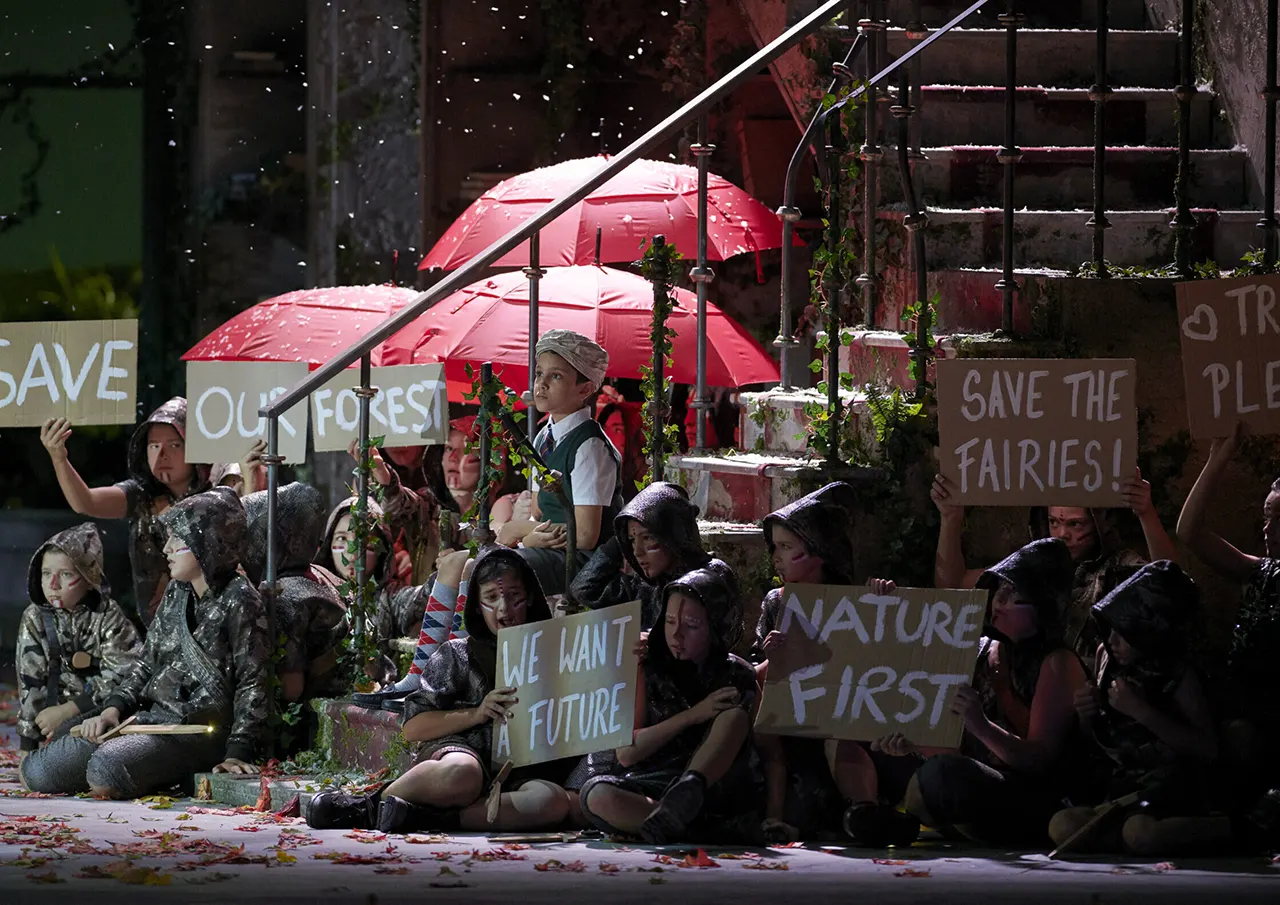
Your concern for ecology manifests itself beyond the sphere of theatre as well — ten years ago, for instance, you organised the artistic marathon titled My Body My Planet.
Before that I had organised in Nice [the festival] Réveillons-nous! — or rather Wake Up! — for COP21 in 2015, which was an enormous and very difficult event to put together, because the people at the theatre I was running were against me and kept telling me: ‘Why would you use the resources of a theatre to talk about the planet?’
We mustn’t forget that, ten years ago, climate change was only a back-page story, and I was — as always — slightly ahead of my time, so everyone thought I was mad.
When I left Nice, five years later, a kind of huge festival took place there — full of street events — that was literally about the planet, organised by the city council itself, practically on the same theme as the one people had once said I had lost my mind over.
So I have managed to leave small, discreet traces — none of them very visible unless you look at the whole picture, as you have done. In the end, what matters is that I know, and now you know as well, what was accomplished.
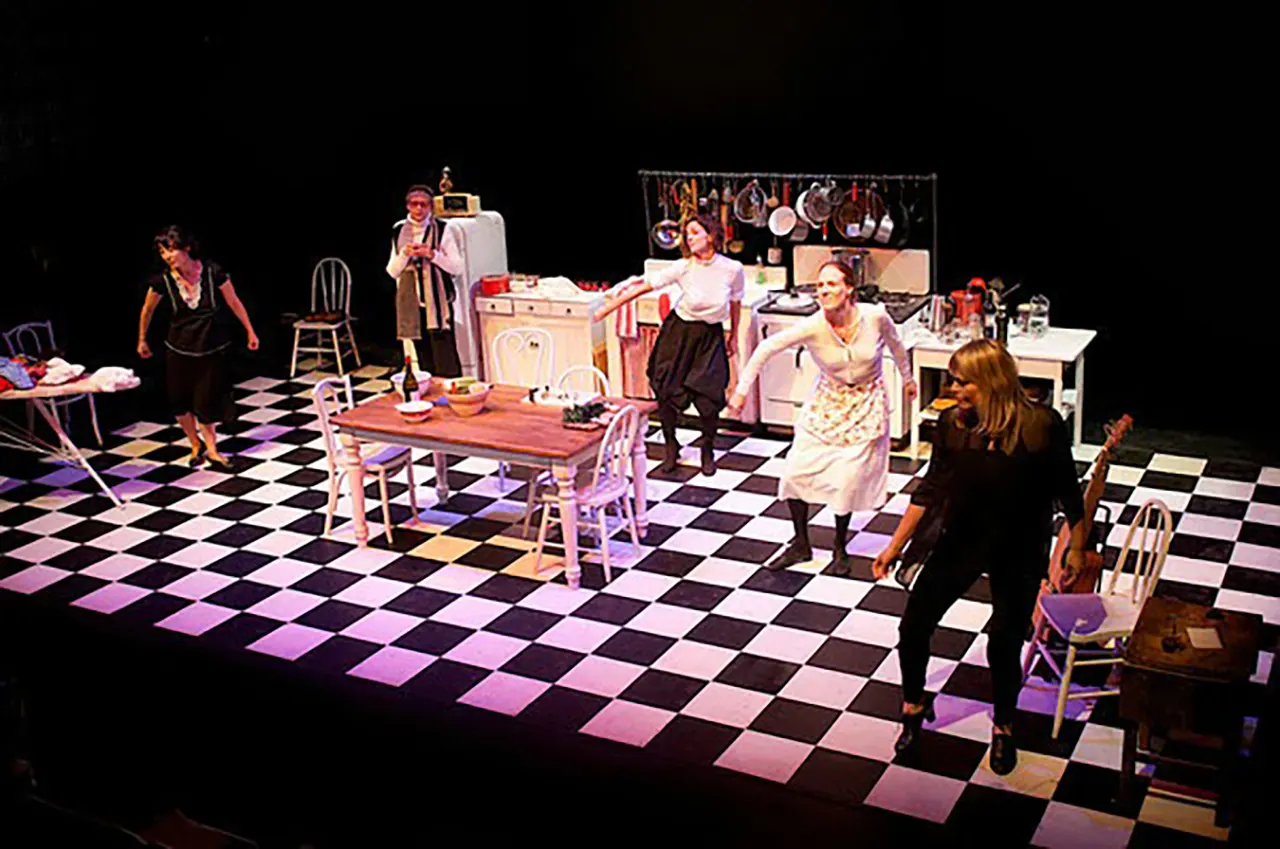
I’ll close this digression and return to the stage, because — from your very first encounter with Shakespeare, All’s Well That Ends Well in 1997, with its group in the African marketplace who spontaneously begin to create a show, through Shakespeare’s Sister in 2013, up to the more recent Lear? — one of the elements that seems to define your practice is the concept of “theatre within theatre”…
That’s because, whatever I do, I always return to theatre. I am simply a child of the theatre, and theatre is for me like a religion.
There are moments when I lose my faith in theatre, moments when I hate theatre, but it embodies my absolute and profound faith and passion.
As for “theatre within theatre” — the reason I use this approach is that there is a part of me that simply cannot believe in the theatrical artifice… probably because of the environment in which I grew up, but also because, at the beginning of my career, I spent ten years performing in penny-ante theatres, in bad productions where, if you slam that cardboard door on stage, it won’t close properly afterwards, and the fake window falls off what passes for a wall.
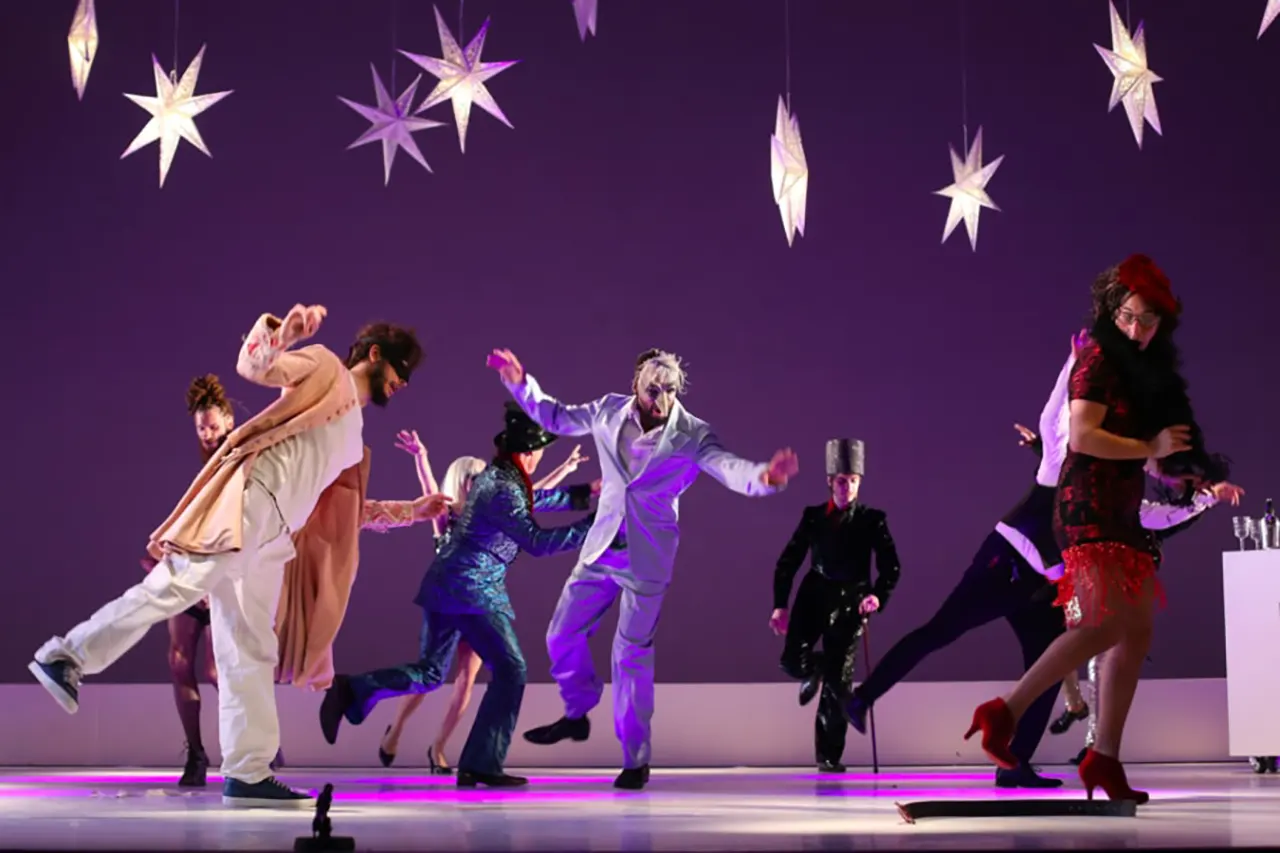
For me it is nightmarish to be in a false and badly built set, so when I became a director I never wanted to see any of that again — because my faith in theatre excludes its falseness. And that is why, deep down, I believe that Brecht is my absolute kindred spirit, and I love to break the “fourth wall” and communicate with the audience at all times.
I have done this less often recently, because I am also drawn to the cinematic effect — not in the sense that it would justify all manner of walls or sets, but because a single element, together with our imagination, makes the film.
I don’t like realism and naturalism; I like minimalism. Well, I talk about the minimum, yet I adore using an enormous number of props — so, unlike my father [the celebrated director Peter Brook — Ed.], I am not a true minimalist, but I also dislike offering the audience a cinematic version of theatre… I prefer to leave that to the imagination of the spectators.
You once said that you like to believe a show can change the spectator’s life. Does the process take precedence — through which you try to convey emotion through theatre — or the result, whose chances of success are difficult to evaluate?
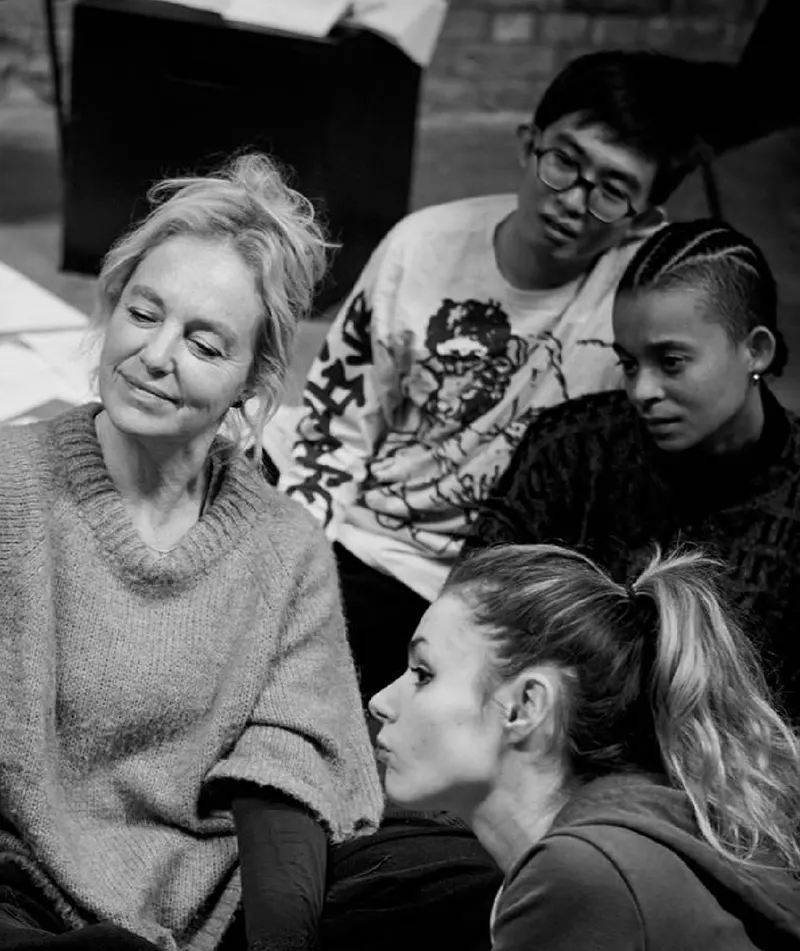
The result is not what I have in mind; it is rather the process through which I, together with the actors, express my belief in certain things. It is about the whole sequence of rehearsals and the emotion we create among ourselves, which usually ends up being transmitted to the audience as well.
At that point it simply becomes magic, because whatever you believe and whatever energy you share finds its continuation in this second bridgehead formed by people, who amplify this spiritual connection… it is something beyond mere words or scientific explanations. There is a kind of vibration that is produced, and the audience is like an entity that feels it, receives it, and then gives it back — and the result is this wonderful, warm emotional exchange.
Relying so much on actors in the working process, how do you select them and what degree of freedom do you offer them throughout? What do you look for in them — and I am thinking especially of very young ones, like the casts of House of Us or Juliette et Roméo?
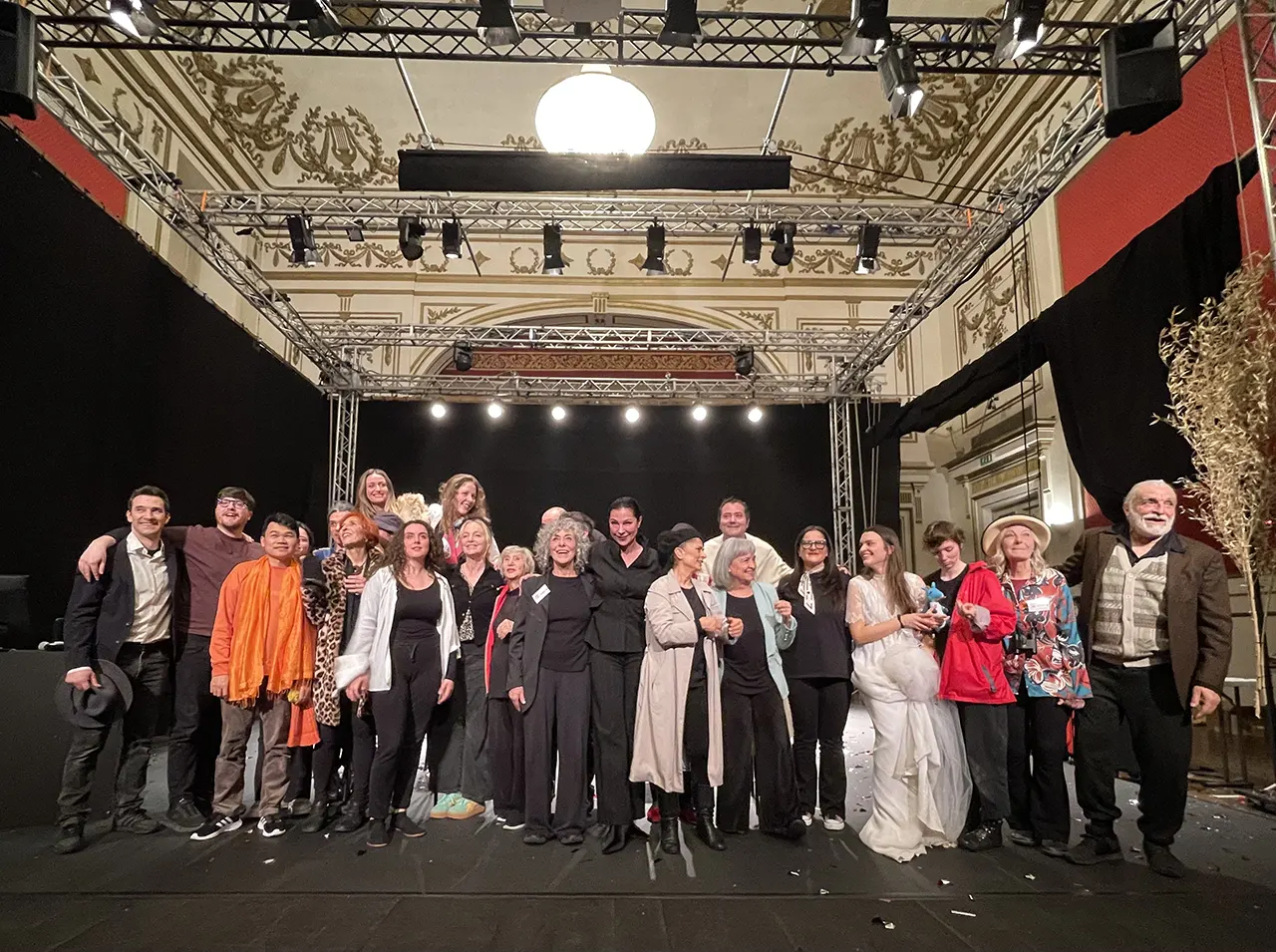
The reality is that I have not been selecting actors for a very, very long time, because I already have a group of people whom I know will possess this spirit.
When I told you at the outset that I gave up building a career and relentlessly pursuing large-scale success, I was referring to the fact that I have absolutely never chosen actors for their brilliance or their fame — even though there were plenty of moments, particularly in France, when I could have done exactly that: used my first breakthrough production to stage plays with very big names.
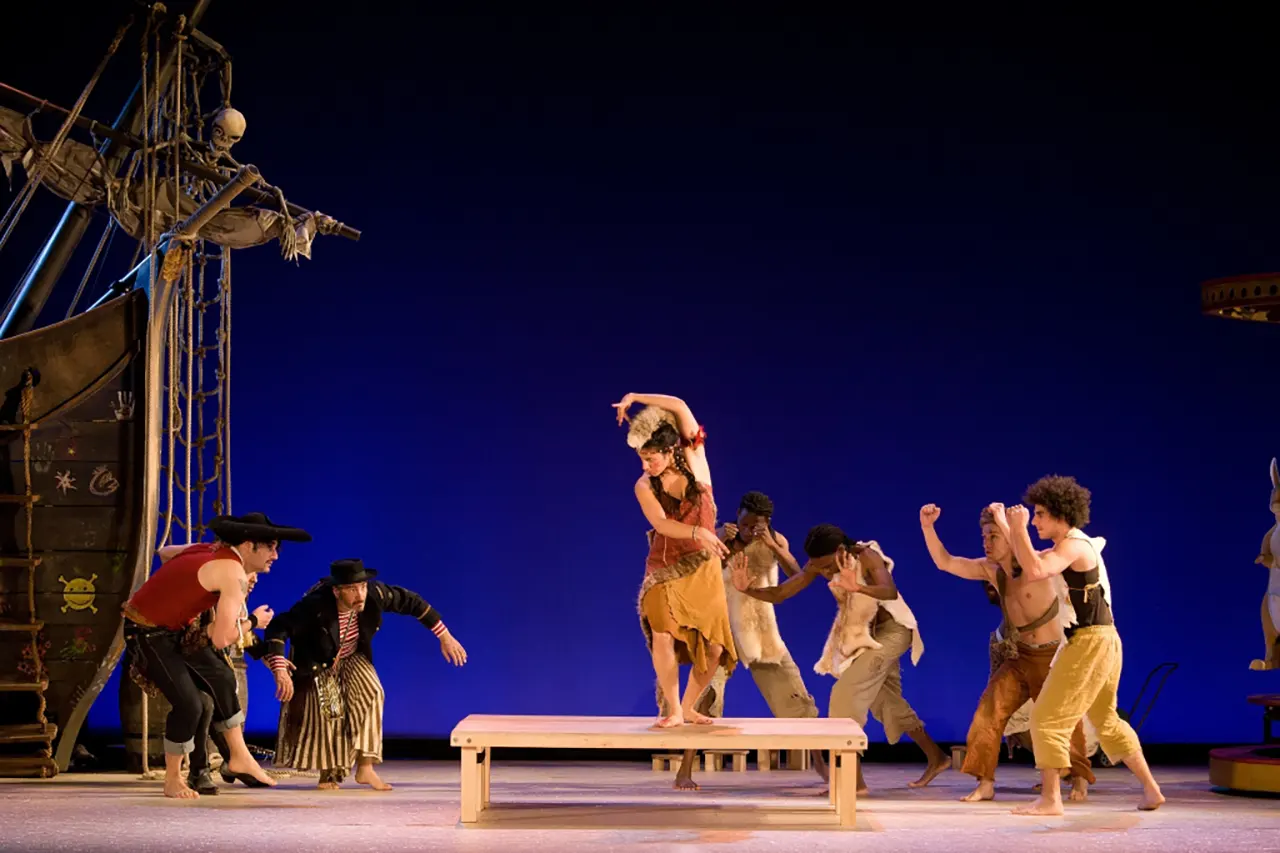
For example, I had a very good relationship with an important Parisian theatre, where I staged two productions at the outset of my career with great success, and the director proposed that I return there for an entire upcoming season.
I said:
‘Well, if I’m doing a season, I’d like to stage several pieces, but all of them with the same actors, playing very different roles.’
Hearing this, she replied:
‘Oh, no, no — you must have a different star for each one!’
Well, that was one of those moments in my career when I simply said:
‘Then I won’t do it, because I’m not interested in having a different star in each show — all I want is to be able to work with the same group of actors over a longer period.’
So once again my Cordelia-like intransigence stood in the way of my professional choices.
Especially at auditions, I have never selected famous people, even if they were very accomplished performers — I prefer to work, whenever possible, only with people whose qualities of soul come before the quality of their art… for me, the heart comes first.
Over the years I have always tried, somehow, to sense this in the person in front of me, whether I met them over a coffee or at an audition, and in 80% of cases my instinct proved to be correct. I now know that my entire company is made up of soulful people. To convey emotion there must be a big heart and great generosity in the person on stage — because if that generosity is absent, it is simply impossible.
If we look at things from this perspective, opera is more restrictive because of its musical structure and the profile of its performers, offering you less freedom from a creative and artistic standpoint. Why has directing opera attracted you so much?
Precisely for the reason you’ve stated, because it is a well-known spiritual truth that, if you have no freedom, you can be much freer. For me, having such total freedom in theatre — where I have to think about a million things, all of which come from my own mind and energy — it is simply liberating to be suddenly constrained by the wonderful structure of music… I find it fabulous! It gives me a focus and a pleasure in inventing that are very different from theatre, because music offers you a form, whereas in theatre I only choose texts that are without form — never texts with a fixed setting.
So in opera, having the form that music provides, you are paradoxically usually very free… only I don’t feel quite free enough in terms of my relationship with myself. I admire the young directors who make opera so cool and fun — who suddenly stop the well-known music and bring in an electric guitar — and I would love to do that too, but I have so far only worked in very classical institutions, with classical conductors, who would probably not let me experiment quite so much.
Moreover, I myself am so devoted to music that I can be considered a little “classical,” so I generally remain super-faithful to the text and the composition, contenting myself with reinventing them in a modern language. I express myself freely, but I still want to convey the story exactly as it was created — so one might say that I am somewhat old-fashioned when it comes to opera, even if my productions appear contemporary, and they are not particularly avant-garde precisely because I am so faithful to the libretto.
On the other hand, in the same year you staged a comparatively more restrained The Magic Flute, you also created Juliette et Roméo, set to rhythms ranging from rap to Italian pop hits — so it is clear that music attracts you well beyond opera. Let’s talk a little about Peer Gynt from 2012, in which you reinvent Ibsen’s anti-hero as a rock star. How did you arrive at that vision of the character?
Once again, it is a fundamental work with which I fully identified — I could have written Peer Gynt in the same way I could have written The Good Person of Szechwan, had I been as gifted a writer as those who created them.
Personally, I felt connected to Peer Gynt as a character in a very strange way — through this obsession of his with making it in that village, and through the objective that, whatever happens, he will manage to build a life that has meaning through success. It is a very difficult theme that I felt acutely throughout reading the play, and I was able to understand it in a certain way, even though I have not made the wrong choices he makes when he opts for the dark side and says ‘yes’ to the trolls.
In real life, I have said ‘no’ to the trolls — but the feeling that, if you don’t succeed in the world of theatre, the arts, music, or any other field, you haven’t truly made it in life, hangs over me like a very large cloud, especially with my father always in the background.
That is why I have always felt a very great closeness to this character, and the moment I consider the most beautiful in the entire play is the one in which Peer returns to the village after having made his fortune, and at the funeral of a little man, the priest gives an incredible speech about the idea of being nobody and, at the same time, somebody — which I find very powerful and, in a way, terrible.
That man, a nobody, is in fact the greatest somebody, because he led a quiet life and did good things for his small family — so he is ultimately more successful and more wonderful than the great Peer Gynt, who made millions and became famous… for me, that is a subject that will remain genuinely interesting for the rest of my life.
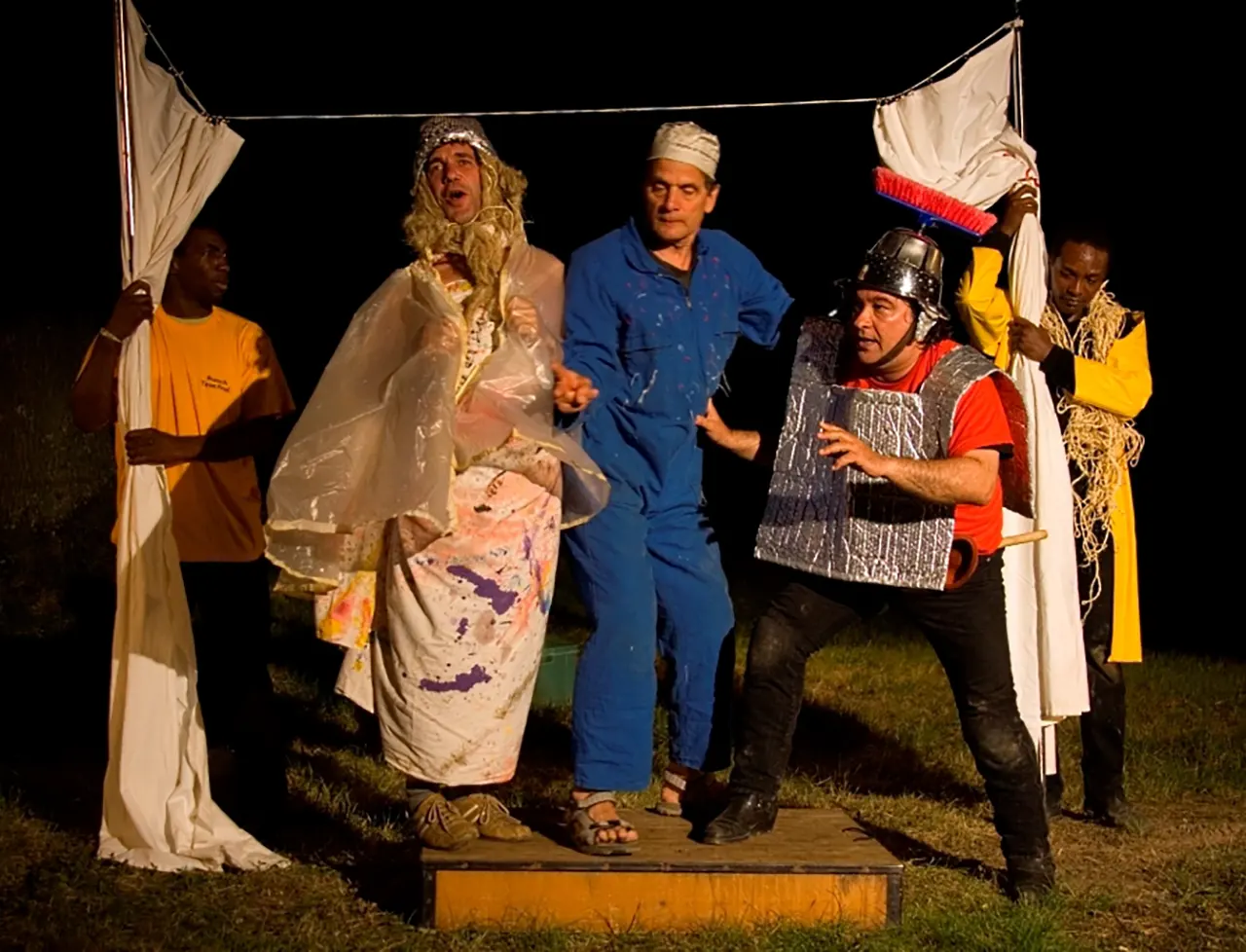
Beyond text, actors, and music, let’s talk a little about visual dramaturgy — because, for example, your opera staging of A Midsummer Night’s Dream featured a fabulous production with a rococo palace and circus artists, while your Parisian adaptation of Shakespeare’s play, En attendant le songe, had practically no set at all. When or how do the visual aspects of a show find their place in your creative process?
I think I inherited from my father a certain fear of the aesthetics associated with design, and for that reason I have always had a very difficult relationship with scenography — besides, I feel it somehow stands in the way of the actor, and the actor will always remain my first love.
Otherwise, I think I have a fairly good aesthetic sense of my own, since I don’t only make ugly and stupid things — but on the other hand, I feel that, at least in recent years, I haven’t had set designers who were truly in the service of my productions.
In the world of opera especially, it is very difficult: sets must be realised two years in advance, at a time when the production is not yet clearly defined in my mind, and then I am forced to improvise a great deal… Consequently, from a visual standpoint, I have always proposed something that looks fine but doesn’t interfere with the show.
In short, yes, working in opera is somewhat constraining — but it simultaneously demands and permits something grand and spectacular.
In that sense, I was personally especially happy last spring with the Weill-Brecht triptych at La Scala, where I have a practically empty space containing only a creation made of plastic bottles that I conceived myself, and a platform that gradually empties more and more… It was the first time I took the risk of having no set, and it was very pleasant.
In opera, everything happens somewhat automatically — you simply have to do it, and that can be enjoyable or, on the contrary, difficult for a director. I haven’t yet found the person with whom I can collaborate with full success.
With theatre it’s a different story — I haven’t had a set designer for a long time there either, and I have been improvising throughout, because in general I have worked with small budgets since leaving Nice, and there was never quite enough money for sets. I stage performances more in empty spaces, using a great deal of old props and my collection of costumes, which I adore.
Here again I am swimming somewhat against the current, because today’s world is very design-oriented, and I do appreciate aesthetics — so I realise that if someone were to redo the visual presentation of my productions, they would probably place my work in a completely different category of interest for intellectual audiences.
For instance, I have a friend I met in Russia when I was on tour with The Tempest, and she is working on a King Lear with her father — I saw a few things she had posted on Instagram that were so beautifully and thoughtfully conceived that I said to myself: ‘Wow, how cool!’ I loved them, and it made me think again that, had I had an extraordinary set designer and a certain budget, my Lear too could have had a set that, without imposing itself, would have been cooler — and that would probably have given my work a slightly different dimension, which would have been lovely.
In our case, circumstances led us to improvise and to create things as we went along, without a very elaborate set.
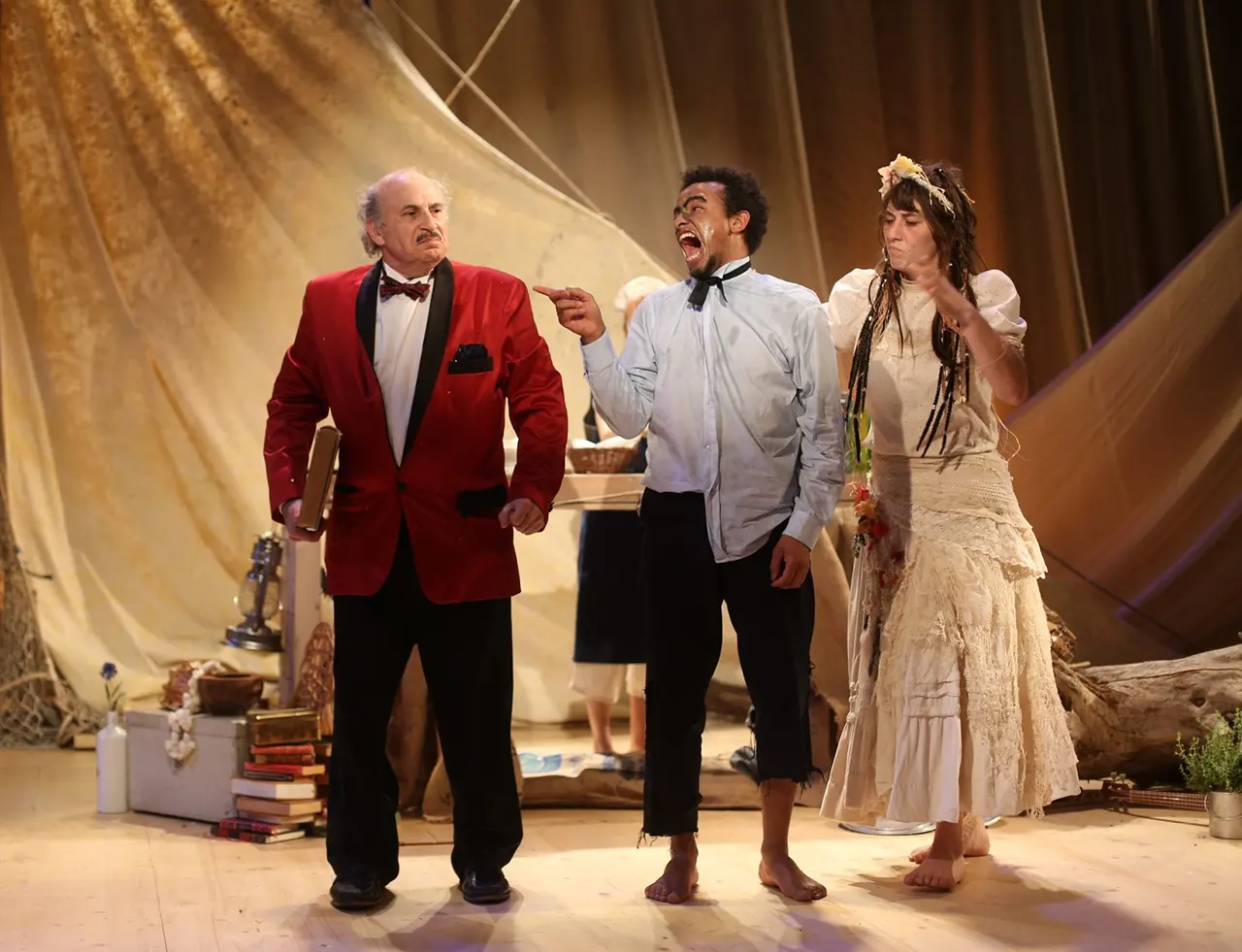
Did improvisation play a role in the case of The Tempest you mentioned? For example, did the idea of Prospero as an Italian Chef — sovereign in his kitchen — form the basis for developing the show, or did it emerge along the way?
It happened as in most cases — first I decide to stage a text, and then, as I read it, I have to imagine the actors, who are generally part of my company, so I know them very well. And once I associate a face with a character, everything comes alive.
It is very hard for me to become interested in a play without imagining the casting, at least in part, and the reason I staged this Tempest [Tempest!, from 2009, is part of Irina Brook’s “Island Trilogy”, alongside the Odyssey, after Homer, and The Island of Slaves, after Marivaux — Ed.] was Renato Giuliani, who had acted in my first Odyssey and is a trained clown.
I thought it would be wonderful to give him a great role as an actor too — why not, indeed… Prospero?
Renato is a born cook who loves to cook, and he is also Italian, so all these things suddenly overlapped in my imagination… especially since a king no longer means very much nowadays, and I like to propose things that have a certain relevance.
Starting precisely from the question ‘What would a king be in today’s world?’, I came to realise that an excellent chef is something like a monarch, and I imagined the whole story from the idea that Prospero is a great Neapolitan cook whose brother throws him out of the restaurant to take over the place — leaving him with only this deserted island, his kitchen utensils, his books, and his daughter.
You know, in some cases, after a while, I actually begin to believe that my versions are, in fact, the originals — and in this case I found myself wondering after a time: was there ever a version in which Prospero was not a cook?
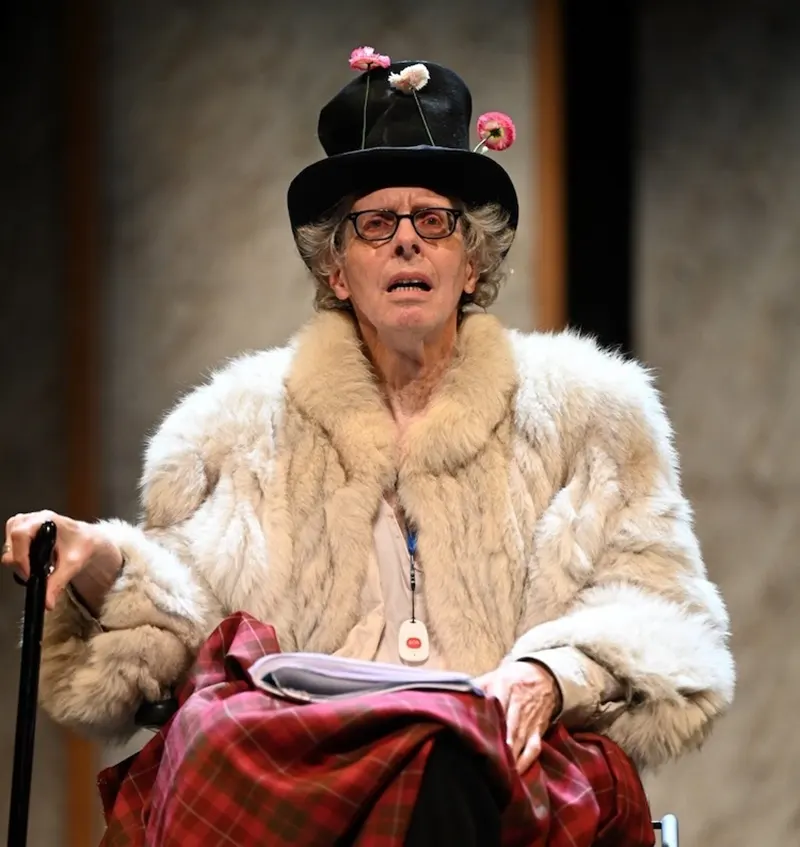
Your Tempest! from 2009 ended with an exclamation mark in the title — a wonder, an astonishment — after All’s Well That Ends Well at the start of your career, which was an affirmation, a certainty. Your 30-year journey alongside Shakespeare arrived in 2023 at a question mark, with Lear? — a questioning. My curiosity is natural… what comes next for Irina Brook?
A very interesting way to arrive at that question… perhaps I should hire you as my therapist.
All’s Well That Ends Well — yes, how full of confidence I was back then, and then with Tempest!, just the same… I don’t know. I feel that, after all this time, perhaps I have grown tired of Shakespeare and want something else. After all, I have done so much for him — I popularised him enormously, especially in France, among people who were afraid of his name and, in truth, didn’t know very well who he was or what he wrote.
It’s as if I were his sales agent, you know — simply sharing him with an audience reticent to approach his plays.
I feel now, for example, that the real tragedy of King Lear is that we have only one performance in Romania [on 25 May, as part of the Craiova International Shakespeare Festival — Ed.] and then… that’s it! That is Lear’s true tragedy — that we play for you one wonderful evening and then it is all over, and that transmission of energy I spoke of never gets the chance to reverberate.
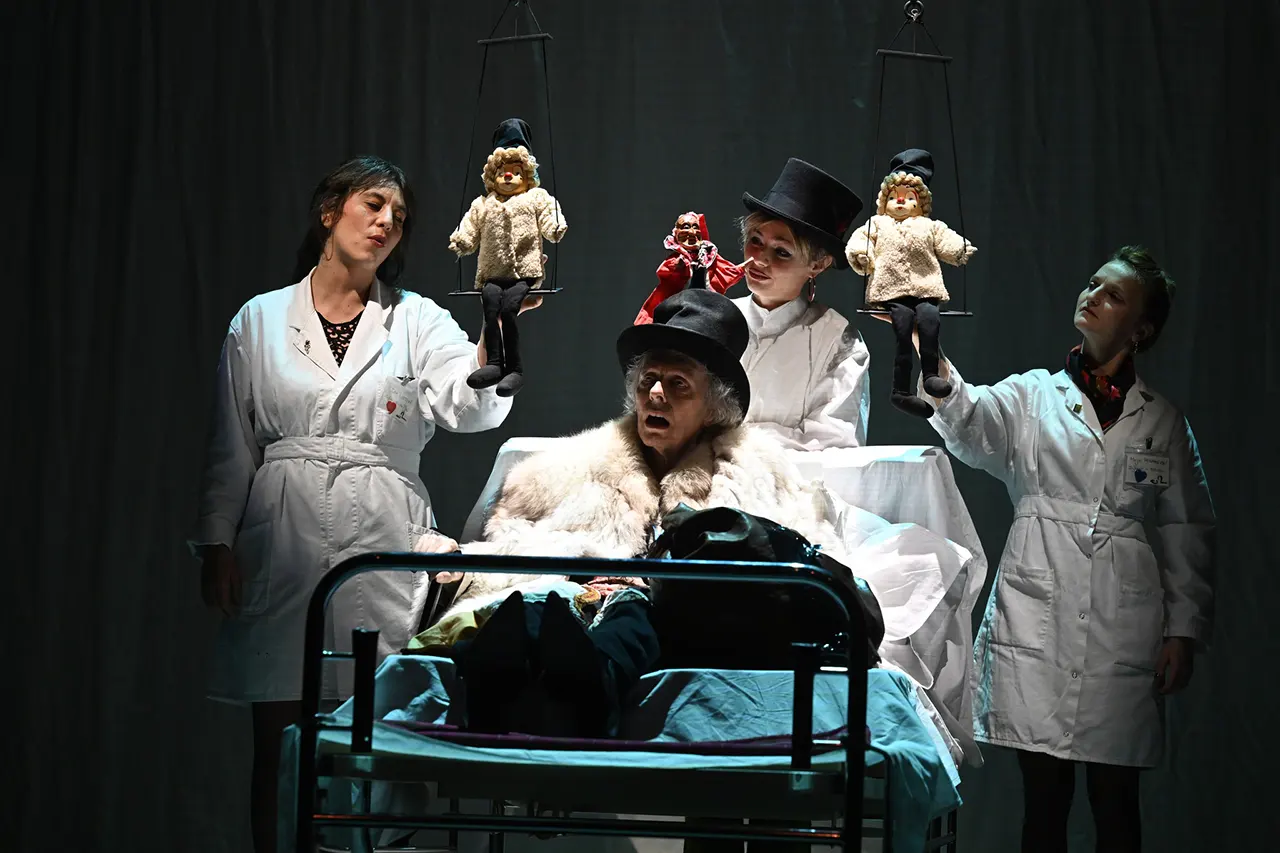
You know, the work on this production was so outside the French system, and the place where it was created was so difficult to reach, that almost no one knew about it — and yet, in the three evenings we performed the show in our little theatre in northern France, I saw that even children aged ten or twelve were moved by the story of Lear, which can obviously be rather complex for their age.
We had schoolchildren in the audience — the most difficult audience there is — and they didn’t move at all, even though the show lasted two hours without an interval. And at the end, when they realised that the old woman — who is, in fact, Cordelia — had died, they all seemed traumatised and moved.
So the show moved people of all ages, and that is why I believe it is a tragedy that there are not more performances of Lear? — it is the only Shakespeare piece with which I would still like to go on tour right now… very sincerely, that is what I would most wish for at this moment.
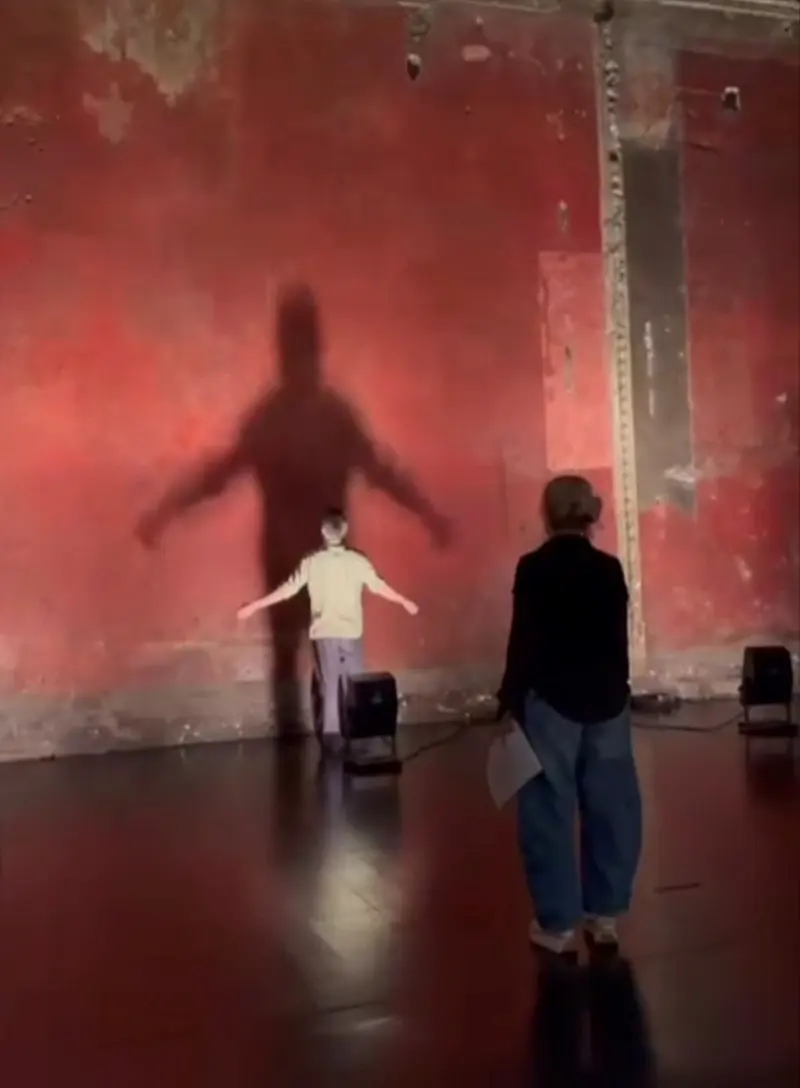
Beyond that, I have another project I want to realise — moving from the rehabilitation of Shakespeare to that of Jesus — but I think this will prove extremely difficult. I am trying to get a production off the ground of a formidable American musical from the 1970s called Godspell, which has fabulous music about the parables of Jesus, and I feel that, in today’s world — given what is happening everywhere — the stories and parables of Jesus are even better than those of Shakespeare.
Looking around me now, I tell myself with ever greater conviction that, although I once believed no one surpasses Shakespeare, I have found some texts that are even more important and more relevant than his. Once you embody and interpret them, these very simple little stories stay with you forever, and the lessons that come from them, one after another, are all supremely topical — because this musical is, in essence, a selection of parables connected through wonderful songs.
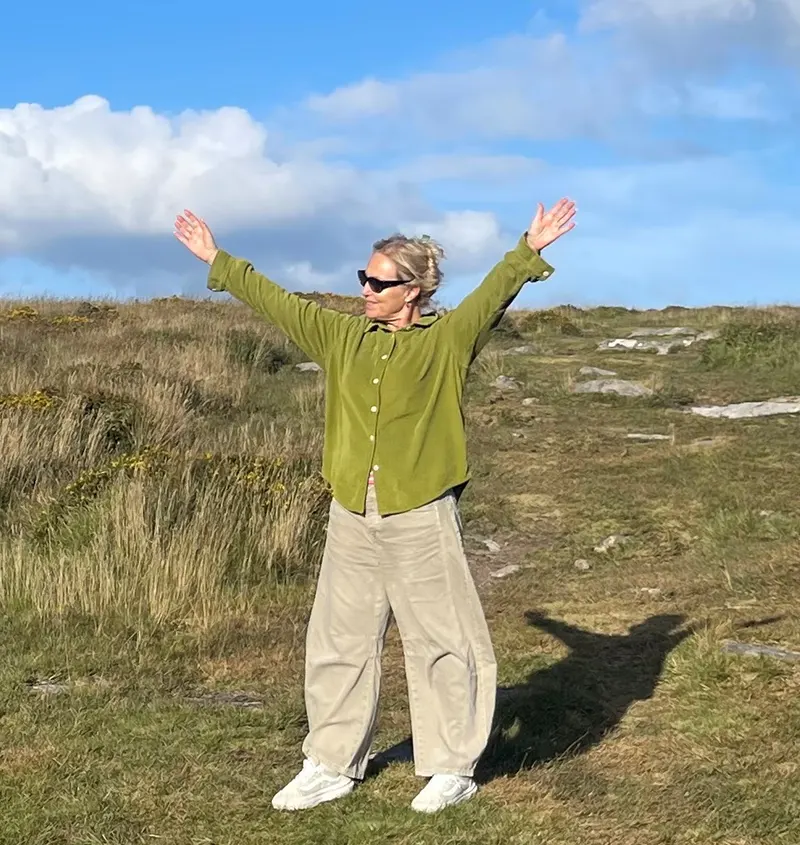
Given the richness of the subject, I feel this is what I want to do in the next few years… and so I move from Shakespeare to Jesus.
I have an extraordinary company in Paris, made up of gospel singers, actors, dancers, and musicians, with whom I organised a four-day workshop, and the result is very promising — but now we need to find a way to develop this project.
You know, if you wanted to invite us to Romania for a week, and someone were willing to pay for twelve fabulous artists who sing and dance to hold a workshop here, we would gladly come and continue this project with you — a project to which I will devote my life to bring to fruition, because I believe in it as much as I believe that this Lear must be seen.
I will not move on to the next project without this one having lived its life, and if it does not get to be seen, I will stop doing anything with Shakespeare. I will simply stop — and move on to the Bible.
Interview by IOAN BIG | CLIN D’OEIL
Header photo: Courtesy of Irina Brook
IRINA BROOK: „Pentru mine, teatrul este ca o religie” — Citește în română →